High-Rise and Condo Water Damage in Arlington, VA
When an upstairs unit floods the stack below, the drying team dries every unit and documents each claim. Serving the Rosslyn-Ballston Corridor, with rapid local response, 24/7.
(703) 215-2108Tap to call the 24/7 dispatch line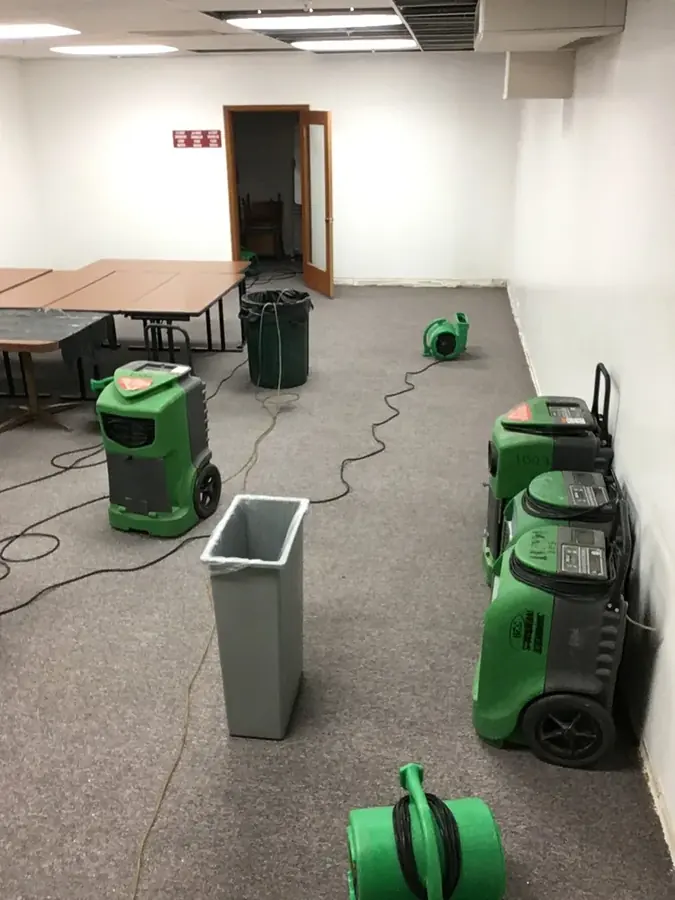
Water damage in a condo or high-rise is never really one unit's problem. Along the Rosslyn-Ballston Corridor, from the towers of Rosslyn to the mid-rise buildings of Ballston, Clarendon, and Crystal City, units are stacked on shared plumbing risers. When a supply line fails or a tub overflows on the tenth floor, gravity carries that water down through the ceilings and walls of every unit beneath it.
These losses take a crew that handles both the water and the people. The drying team dries every affected unit, works with the building's engineer and management, and documents the loss cleanly for each owner and the HOA so the claims do not turn into a fight.
How high-rise is handled in Arlington
- 1
Call and dispatch
Whoever answers the Arlington line picks up 24/7, and the nearest crew heads out with pumps, air movers, and moisture meters.
- 2
Find the source and reach
The crew stops the water and maps its full reach, including what soaked into subfloors, wall cavities, and the units or floors nearby.
- 3
Extract and dry
The extraction crew pulls the standing water, then runs air movers and LGR dehumidifiers to a verified dry standard, not just the surface.
- 4
Verify and document
The drying team logs moisture readings until the structure is dry, then documents the loss with the photos and daily readings an adjuster needs to move a claim.
How condo and high-rise losses spread
A stack loss follows the path water always takes, downward and outward, through the parts of the building that connect the units.
- An overflowing tub, sink, or toilet in an upstairs unit
- A supply-line or appliance-hose failure that runs while the owner is out
- A shared riser or a leak in the wall between units
- A frozen or burst pipe in a vacant unit above
- Water that travels through the floor slab into two or three units below
Knowing your building's water shutoff and emergency contact saves precious time. The flood-insurance basics at FEMA are a useful primer on how coverage works when more than one unit is involved.
What the crew does first
In a multi-unit loss, coordination is part of the emergency, so the crew gets moving on the water and the building at the same time.
- Locate the source unit and confirm the water is shut off
- Extract water from every affected unit, top to bottom
- Open and dry the ceiling and wall cavities between floors
- Coordinate access and timing with building management and each owner
- Document each unit's loss separately for the owners and the HOA
Why buildings need a crew that knows stacks
A single-family playbook does not fit a tower. The water is shared, the access is controlled, and the paperwork has to satisfy several parties at once.
- Moisture hides in the slab and the space between floors, not just one ceiling
- Every hour of delay pulls another unit into the loss
- Owners, tenants, and the HOA each need clear, separate documentation
- Drying has to work around building rules, elevators, and quiet hours
Federal readiness guidance at ready.gov/floods underscores how fast water spreads once it is loose, which is exactly why a stack loss cannot wait.
Water coming through your ceiling from the unit above, or spreading from yours into the units below? Call and a local crew that knows Arlington buildings heads your way.
☎ Call (703) 215-2108IICRC S500 drying, documented for your claim
The extraction crew pulls the standing water first, usually with truck-mounted extraction so the water leaves the building instead of moving to the next room. Air movers then go in at each room's evaporation load, with LGR dehumidifiers pulling that moisture back out of the air. Most crews record readings daily and pull equipment only once the wet material sits within 2 to 4 points of a dry reference in the same building.
From Rosslyn-Ballston across Northern Virginia
Based in the Rosslyn-Ballston Corridor, the response team covers Arlington and Northern Virginia, day or night.
Based in the Rosslyn-Ballston Corridor, local crews cover Arlington and Northern Virginia around the clock, with rapid local response.
Coverage runs across Ballston, Clarendon, Courthouse, Rosslyn, North and South Arlington, Crystal City, Pentagon City, and McLean.
See every neighborhood and ZIP coveredArlington water damage questions, answered
Water is coming through my condo ceiling. What do I do?
Report it to your building right away so they can shut the source unit's water, move valuables clear, avoid outlets and light fixtures where water is coming through, and call. The response team coordinates with management while a crew is on the way.
Do you dry every unit, or just mine?
Every affected unit. A stack loss spreads down through several units, so the crew extracts and dries each one, top to bottom, dries the cavities between floors, then documents each unit's loss on its own.
Who pays when the leak started in another unit?
It depends on the source and your building's bylaws, which is why clean documentation matters. Each unit's loss is recorded separately so the owners, tenants, and the HOA can sort coverage with clear facts, not guesswork.
Can you work within our building's rules and hours?
Yes. The crew coordinates access, elevator use, and quiet hours with building management and schedules the drying around them, while still moving fast enough to stop the water from spreading further.
How fast can you reach a building in Rosslyn or Ballston?
Crews stage right in the Rosslyn-Ballston Corridor and head out the moment the call comes in, any hour. For a stack loss, that speed keeps the water from reaching another floor.
Will you coordinate with our HOA and property manager?
Yes. The response team keeps management informed throughout, provides the documentation the HOA and each owner's carrier need, and acts as one point of contact so the response stays organized.
Water in your home or building right now? Do not wait for the FAQ.
Call (703) 215-2108A local Arlington crew is standing by
Water sitting means damage spreading. Call McLean Water Damage Co and a local crew heads out across Arlington and Northern Virginia, day or night.
(703) 215-2108Call now, a local crew picks up day or night