Structural Drying and Dehumidification in Arlington, VA
Air movers and LGR dehumidifiers dry your walls, framing, and floors to a verified standard across Arlington and the Rosslyn-Ballston Corridor, with rapid local response, 24/7.
(703) 215-2108Tap to call the 24/7 dispatch line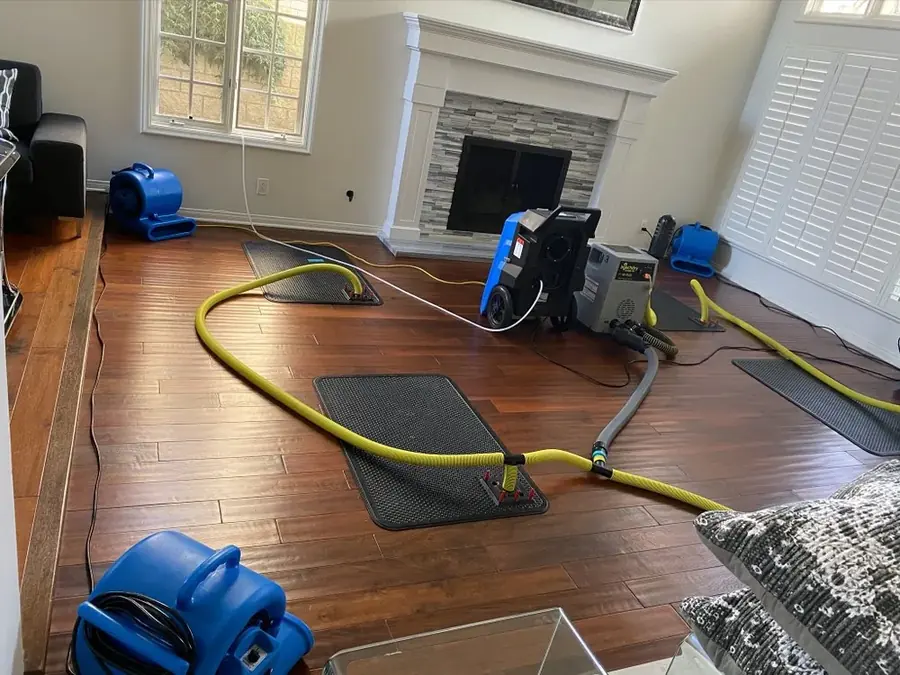
Once the standing water is gone, the water you cannot see is still soaked into your drywall, framing, and subfloor, and Arlington air does nothing to help it leave. McLean Water Damage Co dries structures across the Rosslyn-Ballston Corridor, from Ballston and Virginia Square to Clarendon and Ashton Heights, with rapid local response, day or night. Call (703) 215-2108.
Drying is its own job, and it is the days after the standing water is gone, not the same visit that pulled it out. Extraction clears the surface. Drying is what actually gets a wet wall cavity, a floor joist, and a stud back to a verified dry standard before any of it can rot or turn to mold.
How structural drying is handled in Arlington
- 1
Call and dispatch
Whoever answers the Arlington line picks up 24/7, and the nearest crew heads out with pumps, air movers, and moisture meters.
- 2
Find the source and reach
The crew stops the water and maps its full reach, including what soaked into subfloors, wall cavities, and the units or floors nearby.
- 3
Extract and dry
The extraction crew pulls the standing water, then runs air movers and LGR dehumidifiers to a verified dry standard, not just the surface.
- 4
Verify and document
The drying team logs moisture readings until the structure is dry, then documents the loss with the photos and daily readings an adjuster needs to move a claim.
Why drying is a separate step from extraction
Pulling the standing water out is fast. Getting the moisture back out of the materials it wicked into is slow, and it is the part most people skip.
Wet framing and subfloor read dry on top while they are still saturated an inch down, so a surface that feels fine can be far from finished.
- Trapped moisture cups and buckles hardwood, swells baseboards, and delaminates laminate
- Damp wall cavities are exactly where mold takes hold, often within 24 to 48 hours
- Meter readings, not a dry surface, are the only honest proof the structure is done
- Skip the drying and the repair you pay for later is far bigger than the dry-out
How an Arlington home is dried to a verified standard
The drying team builds a drying system sized to the room, the materials, and how wet they are, then move the equipment as the numbers fall.
Cold snaps in the mid-Atlantic burst supply lines and feed these jobs, so drying often follows a freeze. The federal winter weather guidance covers keeping pipes from freezing in the first place.
- Air movers placed to sweep moving air across every wet surface at once
- LGR, or low grain refrigerant, dehumidifiers that pull water out of the air so materials keep releasing it
- Wall cavity and floor drying where water wicked out of sight
- Daily moisture logs on every wet material until it holds at a dry standard
- A clean handoff from our water extraction and removal crew straight into drying
The humid mid-Atlantic climate works against you
Arlington summers are humid, and damp outdoor air means materials here give up moisture slower than they would in a dry climate. That is the whole reason controlled dehumidification matters instead of open windows and box fans.
Local conditions swing hard through the year, and the National Weather Service office for Baltimore and Washington tracks the storms and humidity that keep indoor drying difficult. Left to itself, a wet wall in Courthouse or Clarendon can sit half dry for weeks and quietly grow mold behind the paint.
- Humid air stalls evaporation, so a wall can feel dry for weeks while still wet inside
- LGR units drop the room humidity low enough that materials actually finish drying
- Older Arlington homes, many built before 1980, hold plaster and wood that dry slowly
- The crew meters daily and adjusts so the dry-out finishes as fast as the materials allow
Floors buckling or walls still damp days after a leak in the Rosslyn-Ballston Corridor? Call now and a drying crew is on the way.
☎ Call (703) 215-2108IICRC S500 drying, documented for your claim
The extraction crew pulls the standing water first, usually with truck-mounted extraction so the water leaves the building instead of moving to the next room. Air movers then go in at each room's evaporation load, with LGR dehumidifiers pulling that moisture back out of the air. Most crews record readings daily and pull equipment only once the wet material sits within 2 to 4 points of a dry reference in the same building.
From Rosslyn-Ballston across Northern Virginia
Based in the Rosslyn-Ballston Corridor, the response team covers Arlington and Northern Virginia, day or night.
Based in the Rosslyn-Ballston Corridor, local crews cover Arlington and Northern Virginia around the clock, with rapid local response.
Coverage runs across Ballston, Clarendon, Courthouse, Rosslyn, North and South Arlington, Crystal City, Pentagon City, and McLean.
See every neighborhood and ZIP coveredArlington water damage questions, answered
Why do I need structural drying if the water is already gone?
Extraction removes the water on the surface, but wet drywall, subfloor, and framing keep releasing moisture for days. Left alone, that trapped water warps floors and feeds mold behind the walls. Drying with air movers and LGR dehumidifiers pulls it out before it does damage. Call (703) 215-2108 to start.
How is drying different from water extraction?
Extraction is pulling out the standing water the day it happens. Drying is the days after that, when the drying team gets the moisture back out of the materials it soaked into. They are two steps of one job, and skipping the second is what leaves homes with hidden mold and cupped floors.
How long does structural drying take in Arlington?
A typical dry-out runs about three to five days, depending on how long the water sat, how far it spread, and how wet the framing was. The humid mid-Atlantic air can slow it, which is why crews use LGR dehumidifiers and meter daily instead of guessing from the surface.
What is an LGR dehumidifier and why does it matter here?
An LGR, or low grain refrigerant, dehumidifier pulls far more moisture out of the air than a household unit. In Arlington's humid climate that matters, because materials only keep releasing water when the surrounding air is dry enough to accept it. It is what lets a wet wall actually finish drying.
How do you know when the structure is really dry?
By the numbers, not the feel. The crew takes moisture readings on every wet material on arrival and logs them daily against a dry standard for that material. When the readings hold at that standard, the structure is done, and we share the log with you and your carrier.
Can you dry inside walls and under floors without tearing everything out?
Often, yes. The crew uses wall cavity and floor drying systems that push dry air into hidden spaces to dry in place rather than demolish, and removes only materials that cannot be dried safely, and tell you which is which before any work starts.
Water in your home or building right now? Do not wait for the FAQ.
Call (703) 215-2108A local Arlington crew is standing by
Water sitting means damage spreading. Call McLean Water Damage Co and a local crew heads out across Arlington and Northern Virginia, day or night.
(703) 215-2108Call now, a local crew picks up day or night