Sump Pump Failure in Arlington, VA
When the pump quits and the pit overflows, crews move fast. Serving the Rosslyn-Ballston Corridor and all of Arlington, with rapid local response, 24/7.
(703) 215-2108Tap to call the 24/7 dispatch line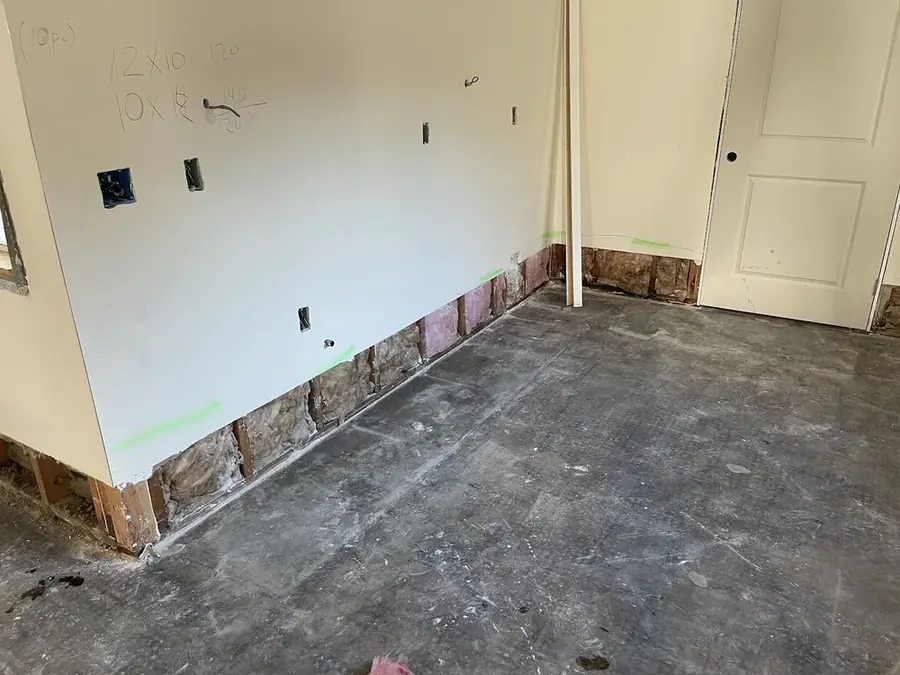
A sump pump is a small motor doing a big job, and when it stops the water it was holding back has nowhere to go but out across your basement floor. In Arlington that failure often shows up at the worst possible moment, in the middle of a heavy storm when the pit is filling fastest.
This page is about the equipment itself. The pump quits, jams on debris, loses power in an outage, or simply cannot keep up with the volume a storm throws at it, and the pit overflows. Catch it early and the cleanup is small. Miss it overnight and you have a flooded lower level.
How sump pump failure is handled in Arlington
- 1
Call and dispatch
Whoever answers the Arlington line picks up 24/7, and the nearest crew heads out with pumps, air movers, and moisture meters.
- 2
Find the source and reach
The crew stops the water and maps its full reach, including what soaked into subfloors, wall cavities, and the units or floors nearby.
- 3
Extract and dry
The extraction crew pulls the standing water, then runs air movers and LGR dehumidifiers to a verified dry standard, not just the surface.
- 4
Verify and document
The drying team logs moisture readings until the structure is dry, then documents the loss with the photos and daily readings an adjuster needs to move a claim.
Why a sump pump fails
Most pump failures trace back to a handful of predictable causes, and knowing which one hit you shapes how the crew prevents the next one.
- Power loss during a storm, exactly when the pump is needed most
- A stuck or tangled float switch that never tells the pump to run
- Debris, gravel, or silt jamming the impeller
- An old motor that burns out after years of steady cycling
- A storm surge that simply overwhelms a single working pump
Frozen or blocked discharge lines are a real problem here too. During a mid-Atlantic cold snap the outlet can ice over so the pump runs but moves no water. The National Weather Service Baltimore/Washington office at weather.gov/lwx is worth watching when storms line up.
What happens when the pit overflows
By the time you call, the water is usually already on the floor, so the crew works in two tracks at once, removing water and finding out why the pump let it in.
- Extract standing water from the slab with pumps and extractors
- Clear and inspect the pit, float, and discharge line
- Pull wet baseboard, pad, and the bottom of any soaked drywall
- Set air movers and dehumidifiers sized for the below-grade space
- Meter the slab and framing until the readings come back dry
Keeping the next storm from flooding you
Once you are dry, a little prevention goes a long way, because a sump pump only helps if it actually runs when the power is out and the rain is coming down.
- Add a battery backup or water-powered backup pump for outages
- Test the float and switch on a schedule, not just after a flood
- Keep the pit clear of gravel and sediment that jams the impeller
- Check that the discharge line stays clear and drains well away from the house
- Consider a second pump in a pit that fills fast during big storms
Small habits matter. Fixing drips and keeping fixtures tight, as covered by EPA WaterSense, reduces the everyday load a sump pump has to move.
Pit overflowing right now?
A failed pump floods a finished basement in a hurry. Call (703) 215-2108 and a crew from the Rosslyn-Ballston Corridor heads your way, day or night, with rapid local response.
IICRC S500 drying, documented for your claim
The extraction crew pulls the standing water first, usually with truck-mounted extraction so the water leaves the building instead of moving to the next room. Air movers then go in at each room's evaporation load, with LGR dehumidifiers pulling that moisture back out of the air. Most crews record readings daily and pull equipment only once the wet material sits within 2 to 4 points of a dry reference in the same building.
From Rosslyn-Ballston across Northern Virginia
Based in the Rosslyn-Ballston Corridor, the response team covers Arlington and Northern Virginia, day or night.
Based in the Rosslyn-Ballston Corridor, local crews cover Arlington and Northern Virginia around the clock, with rapid local response.
Coverage runs across Ballston, Clarendon, Courthouse, Rosslyn, North and South Arlington, Crystal City, Pentagon City, and McLean.
See every neighborhood and ZIP coveredArlington water damage questions, answered
My pump stopped and the pit is filling, what do I do?
Call right away at (703) 215-2108. If you can do it safely, unplug electronics nearby and stay clear of the electrical panel. The nearest crew heads out the moment the call comes in to extract and dry.
Why did my sump pump fail during the storm?
The most common reasons are a power outage, a stuck float switch, debris jamming the impeller, an old worn-out motor, or simply more water than one pump can move. The crew inspects the pit to find which one hit you.
Should I have a backup pump?
Yes, especially in Arlington where storms and outages arrive together. A battery or water-powered backup keeps the pit clear when the primary pump loses power, which is exactly when you need it most.
How is this different from basement flooding?
Basement flooding is about the water and where it came from. This page is about the equipment. When the pump itself fails or is overwhelmed, the pit overflows, and prevention focuses on the pump and its backup.
Can you dry the basement, not just remove the water?
Yes. The crew extracts the standing water, then sets air movers and dehumidifiers and meters the slab and framing daily until the readings confirm the space is truly dry.
Do you document everything for insurance?
Yes. The crew photographs the failure and the loss, logs the moisture readings, and records what is removed and dried so you have a clear file for your adjuster.
Water in your home or building right now? Do not wait for the FAQ.
Call (703) 215-2108A local Arlington crew is standing by
Water sitting means damage spreading. Call McLean Water Damage Co and a local crew heads out across Arlington and Northern Virginia, day or night.
(703) 215-2108Call now, a local crew picks up day or night